
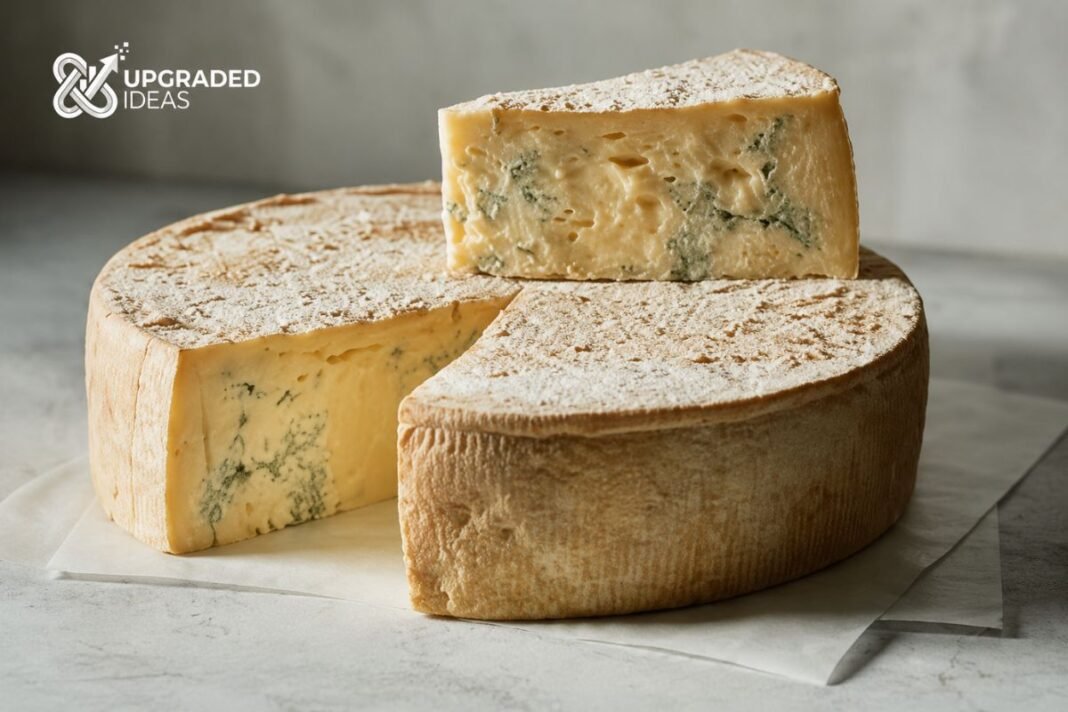
What Is Masgonzola Cheese?
Masgonzola is a fusion cheese that brings together two beloved Italian dairy traditions — the luscious creaminess of mascarpone and the bold, tangy character of Gorgonzola. Think of it as a gateway cheese for anyone curious about blue cheese but not quite ready for an intense sharp taste right away.
Key Concept at a Glance
| Feature | Detail |
| Base cheeses | Mascarpone + Gorgonzola |
| Texture | Soft, smooth, spreadable |
| Flavor | Mild to bold, creamy, slightly tangy |
| Origin | Italian cheese tradition |
| Best for | Spreads, sauces, pasta, pairings |
By combining mascarpone’s velvety richness with Gorgonzola’s savory blue cheese character, Masgonzola delivers a creamier, milder flavor than classic blue cheeses. That’s exactly why it’s catching the attention of both cheese novices and seasoned gourmets worldwide. It sits comfortably in the veined cheeses family while remaining approachable enough for everyday cooking.
Origin, History & Italian Blue Cheese Tradition
Italy’s northern regions — particularly Lombardy and Piedmont — have nurtured some of Europe’s most iconic cheeses for centuries. Gorgonzola, one of the oldest European blue cheeses, traces its roots back hundreds of years in these very regions. Local dairy farms supplied premium cow’s milk, and traditional methods passed down through generations shaped the authentic Italian cheesemaking culture that still thrives today.
Masgonzola grew out of this rich Italian cheese tradition as chefs and artisanal producers began experimenting with the folding technique — gently combining mascarpone and Gorgonzola to achieve a smoother, more spreadable result. While it lacks a PDO (Protected Designation of Origin) status like its parent cheese, it carries the spirit of European cheesemaking and continues to evolve as a beloved gourmet cheese in both Italian kitchens and global food scenes.
Types, Taste & Characteristics of Masgonzola
Flavor Profile
Masgonzola’s taste depends largely on which style of Gorgonzola forms its base:
- Dolce-inspired Masgonzola — Uses young Gorgonzola for a mild flavor, gentle creaminess, and buttery finish with a subtle zing. Perfect for cheese lovers who prefer a balanced taste.
- Piccante-inspired Masgonzola — Uses aged Gorgonzola for a bolder, more pungent character with earthy, spicy, and tangy notes layered beneath the creaminess.
Texture & Aroma
The smooth texture is one of Masgonzola’s most celebrated qualities. The mascarpone brings a velvety, luxurious mouthfeel while the blue-green veins of Penicillium mold run through in a beautiful marbling effect. The rind, when present, tends toward an ivory or beige shade on younger versions and a darker brown on older ones.
Its aroma is rich but less aggressive than a classic blue cheese — a strong scent softened by the creamy base, making it far more approachable for those sensitive to pungent cheeses.
How It Compares to Other Blue Cheeses
| Cheese | Texture | Intensity | Origin |
| Masgonzola | Soft, spreadable | Mild to bold | Italy (fusion) |
| French Roquefort | Crumbly | Sharp, tangy | France |
| English Stilton | Semi-soft, firm texture | Bold, nutty | England |
| Gorgonzola Dolce | Soft, creamy | Gentle, mild | Italy |
How Masgonzola Cheese Is Made
Ingredients & Milk Selection
High-quality Masgonzola starts with premium cow’s milk — usually pasteurized milk sourced from local dairy farms in Italian cheesemaking regions. The milk quality is crucial because it sets the tone for the final flavor and texture.
Step-by-Step Production
- Milk preparation — Fresh milk is warmed and inoculated with lactic acid bacteria and natural bacteria cultures.
- Curdling — Rennet is added to form curds, which are then cut and separated from the whey.
- Molding process — Curds are placed into molds, and Penicillium mold cultures are introduced to develop the signature blue-green veins.
- Salting — The cheese is salted to preserve flavor and support rind formation.
- Affinage (aging) — Carefully managed air flow and humidity allow mold growth and flavor development. Young Masgonzola is aged 2 to 4 weeks for a gentle flavor, while aged Masgonzola can mature for 45 days or 80+ days for stronger taste.
- Folding with mascarpone — After aging, the Gorgonzola is blended using the folding technique with cream cheese-like mascarpone to create the final spreadable product.
Traditional vs modern production mainly differs in scale and affinage control — artisanal producers rely on cellar aging with natural conditions, while commercial operations use temperature-controlled environments for consistent results.
Nutritional Value & Health Benefits
Masgonzola offers a solid nutrition profile that appeals to health-conscious cheese lovers. Here’s a general breakdown per 100g serving:
| Nutrient | Approximate Amount |
| Calories | ~350–380 kcal |
| Protein | ~15–18g |
| Fat | ~28–32g |
| Carbohydrates | ~2–3g |
| Calcium | High |
| Sodium | Moderate |
| Vitamin A | Present |
| Phosphorus | Present |
Health Highlights
- Protein supports muscle growth and repair, making it a good option for active people.
- Calcium and phosphorus contribute to bone health and dental health.
- Vitamin A plays a role in immune system function.
- Its low carbs content fits well into many healthy diet plans.
- The presence of probiotics and beneficial bacteria from the aging process supports gut health.
Things to consider: Masgonzola has a notable fat content and sodium level, so those on low sodium diets or watching energy-rich food intake should practice portion control. It’s always wise to enjoy it as part of a balanced, healthy diet.
Best Ways to Eat & Use Masgonzola
Perfect Pairings
Masgonzola is incredibly versatile. Its smooth creaminess and delicate blue veining make it a star across many dishes and occasions.
With bread & crackers:
- Spread generously on crusty bread or crackers for an easy starter
- Use on bruschetta for a sophisticated appetizer
In savory dishes:
- Stir into creamy pasta sauces for added richness
- Dollop over risotto or polenta for indulgent depth
- Add to flatbreads and pizzas as a mozzarella alternative (milder intensity version)
- Toss into salads with leafy greens, walnuts, pears, or apples for a sweet-savory bite
With fruits:
- Pair with figs, apples, and pears for a delightful dessert-style board
- Try alongside honey and dark chocolate for a memorable sweet-savory combination
Wine & Drink Pairings
| Wine Style | Example |
| Sweet wines | Moscato, dessert wine |
| Sparkling whites | Prosecco, sparkling whites |
| Chilled whites | Light whites, fruity options |
| Full-bodied red wines | Vintage robust wines with bold meats |
Can It Replace Gorgonzola in Recipes?
Absolutely — and in many cases it performs even better. Because Masgonzola is creamier and has a milder intensity, it melts more smoothly into sauces, making it ideal for creamy pasta sauces and melting sauces. For dishes requiring that classic sharp tangy flavor of Gorgonzola, the Piccante-style version works best.
Storage Tips, Shelf Life & Buying Guide
How to Store It Properly
Proper storage preserves Masgonzola’s flavor, texture, and blue-veined look. Here’s what to keep in mind:
- Wrap opened cheese in parchment paper or wax paper, then loosely cover with aluminum foil — this prevents drying prevention while allowing a little air flow.
- Store between 2 to 6 degrees Celsius (36–43°F) in the refrigerator, away from strong-smelling foods.
- Avoid airtight packaging for long periods, as this can affect the mold and alter the flavor.
Shelf Life
- Unopened: Several weeks to many months depending on aging.
- Opened: Best consumed within 1–2 weeks for preserving flavor and preserving texture.
Signs of Fresh vs Spoiled Cheese
| Fresh Masgonzola | Spoiled Masgonzola |
| Ivory or creamy color | Unusual discoloration |
| Blue-green veins intact | Pink or black mold growth |
| Balanced taste | Overly bitter or off smell |
| Smooth, spreadable | Slimy or unusually dry |
What to Look for When Buying
When selecting Masgonzola, look for an artisanal or high-quality producer that uses authentic Italian cheesemaking methods. Check that the cheese has a consistent marbling effect and a fresh scent rather than an overwhelming flavor of ammonia, which signals over-aging. A good piece will have delicate blue veining and a creamier mouthfeel with a pleasant, balanced cheese aroma.
FAQs About Masgonzola Cheese
Q1: Is Masgonzola a real Italian cheese?
It is inspired by authentic Italian cheese tradition, specifically the combination of Gorgonzola and mascarpone, though it does not hold a PDO designation.
Q2: Is Masgonzola stronger than regular blue cheese?
No — it is generally milder and creamier than most classic blue cheeses like French Roquefort or English Stilton.
Q3: Can beginners enjoy Masgonzola?
Yes, its approachable flavor and smooth texture make it an ideal gateway cheese for anyone new to blue cheese.
Q4: What foods pair best with Masgonzola?
It pairs beautifully with honey, walnuts, fruits like pears and figs, pasta, flatbreads, and both sweet wines and sparkling whites.
Q5: Is Masgonzola healthy?
In moderate portions, it offers good protein, calcium, and probiotics, making it a worthwhile addition to a balanced, healthy diet.
Conclusion
Masgonzola cheese is a wonderful example of how Italian cheese culture continues to innovate without losing its roots. By combining the luxurious smoothness of mascarpone with the bold, savory character of Gorgonzola, it creates an unforgettable balance that appeals to cheese novices and seasoned gourmets alike. Whether spread on bread, stirred into pasta, or enjoyed on a cheese board with honey and fruits, Masgonzola brings an indulgent, creamier experience to the blue cheese world. As more cheese lovers discover its versatile, approachable nature, its popularity is only set to grow — one creamy, tangy bite at a time.

Welcome to our site. I am admin of Upgradedideas.com, an AI-Powered SEO, And Content Writer with 4 years of experience. I help websites rank higher, grow traffic, and look amazing, my goal is to make seo and web design simple and effective for everyone. let’s achieve more together!