
Here’s a question every plant parent eventually asks: Am I feeding my plants too much? Not enough? At the wrong time?
The honest answer is — it depends on the season.
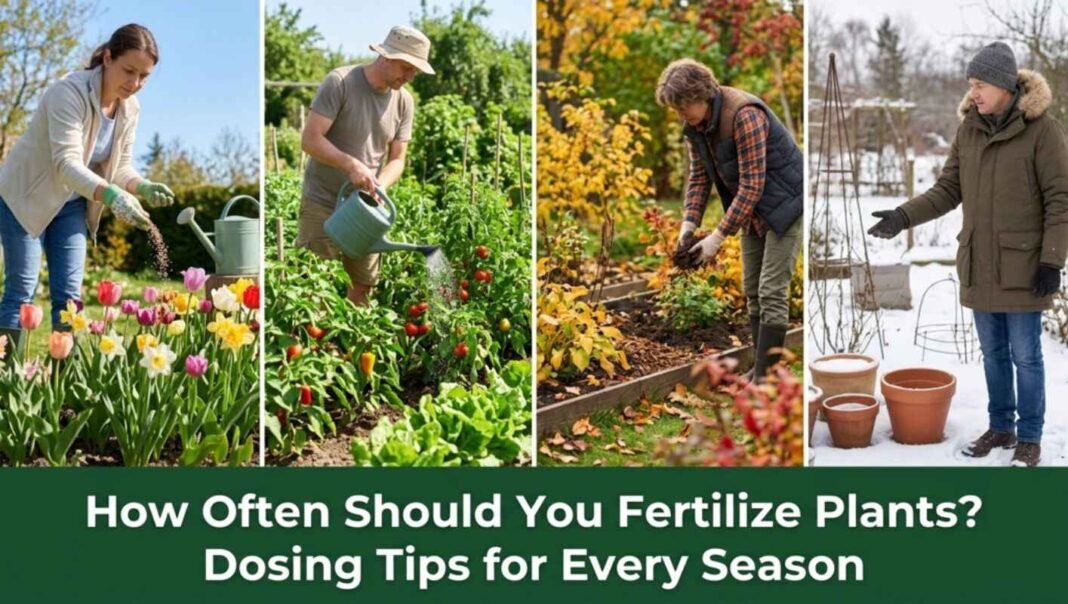
Plants have a rhythm. They grow hard in spring, push fruit in summer, slow down in fall, and rest in winter. Fertilizing without respecting that rhythm is like eating a full Thanksgiving meal before a nap — it doesn’t help, and it might cause real harm.
This guide gives you a clear, practical answer to how often you should fertilize plants, with specific dosing tips tuned to every season of the year.
Why Fertilizer Frequency Matters as Much as Amount
You can have the right fertilizer at the right dose — and still harm your plant by applying it at the wrong time.
Here’s why:
- Dormant plants can’t absorb nutrients. Fertilizing a dormant plant builds up salts in the soil with no uptake — leading to root burn when growth resumes.
- Active-growth plants need consistent feeding. Under-feeding during peak growth means smaller harvests, fewer blooms, and weak structure.
- Over-feeding late in the season can push soft new growth that’s vulnerable to frost damage.
According to The Royal Horticultural Society, timing fertilizer applications to match growth stages is just as important as the NPK formula you choose.
Spring: The Season to Start Strong
Spring is the most important fertilizing window of the year. As temperatures rise and daylight increases, plants shift out of dormancy and demand nutrients fast.
What to Do in Spring
- Start feeding 2–4 weeks after new growth appears — not before. Early applications often wash away before roots can use them.
- Use a balanced or nitrogen-heavy fertilizer (e.g., 10-10-10 or 20-5-5) to support the flush of leaf and stem growth.
- For perennials and shrubs, one well-timed spring feeding with slow-release granules can cover the first 2–3 months.
Spring Frequency Guide
| Plant Type | Frequency in Spring |
| Vegetables (in-ground) | Every 3–4 weeks |
| Container vegetables | Every 1–2 weeks (liquid) |
| Flowering shrubs | Once, slow-release granular |
| Lawn/grass | Once at green-up |
| Houseplants | Every 2–4 weeks (resume from winter break) |
Penn State Extension recommends a spring lawn application timed to when your grass is actively growing — not necessarily the calendar date.
Summer: Peak Feeding Season
Summer is when plants are working hardest — producing flowers, fruit, and foliage. This is the peak period for how to dose fertilizer for plants.
Summer Strategy: Frequent, Moderate Doses
Avoid the temptation to over-feed in summer. High heat can cause fertilizer salts to concentrate in soil more quickly, especially in containers.
Best practices:
- Liquid fertilizer every 2 weeks for most actively growing plants
- Granular slow-release every 6–8 weeks as a top dressing
- Switch to a bloom or fruit formula (higher P and K, lower N) for tomatoes, peppers, and roses once flowering begins
The Tomato Rule
Tomatoes are heavy feeders but need different nutrients at different stages:
- Transplant to first flower: balanced NPK (8-8-8)
- Flowering to fruiting: high-phosphorus (5-10-5)
- Full fruiting: reduce nitrogen, maintain potassium
University of Florida IFAS Extension has a comprehensive tomato fertilization schedule worth bookmarking.
Fall: Time to Wind Down
As days shorten and temperatures drop, plants signal the approach of dormancy. Your fertilizer approach needs to shift completely.
What Not to Do in Fall
- Don’t apply high-nitrogen fertilizers after late summer. This forces lush, frost-tender new growth.
- Don’t fertilize perennials after they’ve finished blooming — let them harden off naturally.
What Fall Fertilizing Is Good For
- Lawns: A late-fall potassium-rich feeding (sometimes called a “winterizer”) strengthens roots and improves spring recovery. Look for formulas like 5-0-20.
- Bulbs: If you’re planting spring bulbs, add a small amount of bone meal (high phosphorus) at planting depth to support root development.
- Trees and shrubs: A light balanced fertilizer in early fall (6–8 weeks before first frost) is fine — but stop there.
Expert Note: According to Oregon State University Extension, fall is actually an ideal time to fertilize your lawn because the grass is still photosynthesizing but not putting energy into top growth — nutrients go straight to the roots.
Winter: The Rest Period
For most outdoor plants and many houseplants, winter means stop feeding entirely.
Why Winter Feeding Hurts
Dormant plants have:
- Reduced root activity
- Slower water uptake
- Minimal photosynthesis
Fertilizer applied in this state just builds up in the soil — creating toxic salt concentrations that damage roots when spring arrives.
Exceptions: Plants That Still Need Winter Feeding
| Plant Type | Winter Feeding? | Notes |
| Tropical houseplants (active) | Very light (¼ dose) | Only if actively growing under grow lights |
| Winter vegetables (kale, spinach) | Every 4–6 weeks | These are actively growing |
| Citrus trees (indoors) | Monthly (half dose) | Citrus doesn’t fully go dormant |
| Orchids in bloom | Monthly orchid-specific fertilizer | Blooming = active growth phase |
Seasonal Dosing Quick Reference Chart
| Season | Frequency | Type | Dose |
| Spring | Every 2–4 weeks | Balanced or N-heavy | Full label dose |
| Summer | Every 1–2 weeks | Bloom formula for fruiting plants | ½–full label dose |
| Early Fall | Every 4–6 weeks | Low-N, high-K | Half dose |
| Late Fall/Winter | Stop (most plants) | Winterizer for lawns only | Light dose |
How Fertilizer Frequency Differs: Outdoor vs. Indoor Plants
Indoor plants don’t follow the seasons as dramatically as outdoor ones, but they still slow down in winter.
General indoor plant feeding schedule:
- Spring/Summer: Feed every 2–4 weeks with diluted liquid fertilizer
- Fall: Reduce to once a month
- Winter: Stop unless the plant is actively growing or flowering
The Sill has an excellent beginner’s guide on indoor plant fertilizing schedules that aligns with these principles.
Signs Your Plants Are Telling You to Feed Them
Your plants will tell you when they’re hungry. Look for:
- Pale green or yellow leaves (nitrogen deficiency)
- Purple-tinged leaves (phosphorus deficiency, common in cool soil)
- Brown leaf edges (potassium deficiency OR over-fertilization — context matters)
- Slow, weak growth despite adequate water and light
- Small fruit or flowers compared to previous seasons
If you see these signs, first check your watering and light — then consider a gentle, half-dose feeding.
Expert Tips on Fertilizer Timing
1: Don’t fertilize immediately after transplanting. Let roots settle for 2–3 weeks before beginning any feeding program. Clemson Extension recommends waiting even longer for large woody transplants — up to a full growing season.
2: Fertilize in the morning or evening, never during the heat of the day. Midday heat accelerates evaporation and increases the risk of foliar burn if any fertilizer touches leaves.
3: Track your last frost dates at The Old Farmer’s Almanac Frost Calculator to time your spring feeding accurately. Start feeding 2 weeks after your last frost date for outdoor plants.
FAQs: How Often to Fertilize Plants
1: Can I fertilize plants every week?
For most plants, weekly feeding is too frequent with full doses. If you want to fertilize weekly, use ¼ of the recommended dose each time. This “constant feed” method works well for heavy-feeding container vegetables.
2: Should I fertilize before or after rain?
Light rain after granular fertilizer application is beneficial — it helps carry nutrients into the soil. Heavy rain within a few hours can wash away fertilizer before it’s absorbed. For liquid fertilizer, avoid applying if heavy rain is expected within 12 hours.
3: My plant looks healthy — should I still fertilize?
A healthy plant in active growth still benefits from regular feeding. If it’s been more than 6 weeks since the last feeding during growing season, a half-dose application won’t hurt.
4: Do succulents and cacti need seasonal adjustments too?
Yes. Feed monthly at ¼ strength during spring and summer only. Skip fall and winter entirely.
5: What if I’ve been over-fertilizing? How do I fix it?
Flush the soil with plain water (3× the pot’s volume for containers) to leach excess salts. Then withhold fertilizer for 4–6 weeks and let the plant recover. Trim any badly burned foliage.
Conclusion
Fertilizing your plants on the right schedule — not just at the right dose — is what separates okay plants from thriving ones.
Feed boldly in spring. Stay consistent but measured through summer. Wind down in fall. Rest in winter. That simple seasonal rhythm, applied consistently, will do more for your garden than any premium fertilizer formula.
Start this season with a plan. Check what’s growing, pick the right fertilizer, and mark your calendar. Your plants are already waiting.

Welcome to our site. I am admin of Upgradedideas.com, an AI-Powered SEO, And Content Writer with 4 years of experience. I help websites rank higher, grow traffic, and look amazing, my goal is to make seo and web design simple and effective for everyone. let’s achieve more together!